
Historia
The year was 1639. For the first time, the students from Västergötland at Uppsala University gather together to honor their late classmate Andreas Andreae, who had passed away on April 28. These young men from Västergötland took the first steps on the path that would lead to the Västgöta Nation of today.
By 1639, seven years had passed since Gustav II Adolf fell at Lützen, and the young Queen Christina was ruling the country. Uppsala University was experiencing a period of prosperity, largely thanks to the large donation—the Gustavian estate—it had received 15 years earlier. The university was led by its chancellor, Johan Skytte.
Students from Västergötland came to Uppsala to become priests. That was the case for the vast majority of them. They would spend a few years at the academy, and then return to their home region to a hopefully decent livelihood in the service of the church. For the first 25 years, the nation (and the other nations that were established around this time) existed without being recognized by the consistory. In 1663, however, the university board decided that the time was ripe for recognition. Certain requirements were attached to this recognition! The most important was that each nation must have an inspector—one of the university’s professors.
The current inspector of the Västgöta Nation is Bertil Wiman, a professor of tax law in the Department of Law. Somewhat jokingly, the inspector’s role is often likened to the hand that tugs the nation’s ear when it misbehaves. The modern role of inspector, as embodied by Bertil Wiman, is, however, that of a much-loved and likable friend at the nation’s various events.
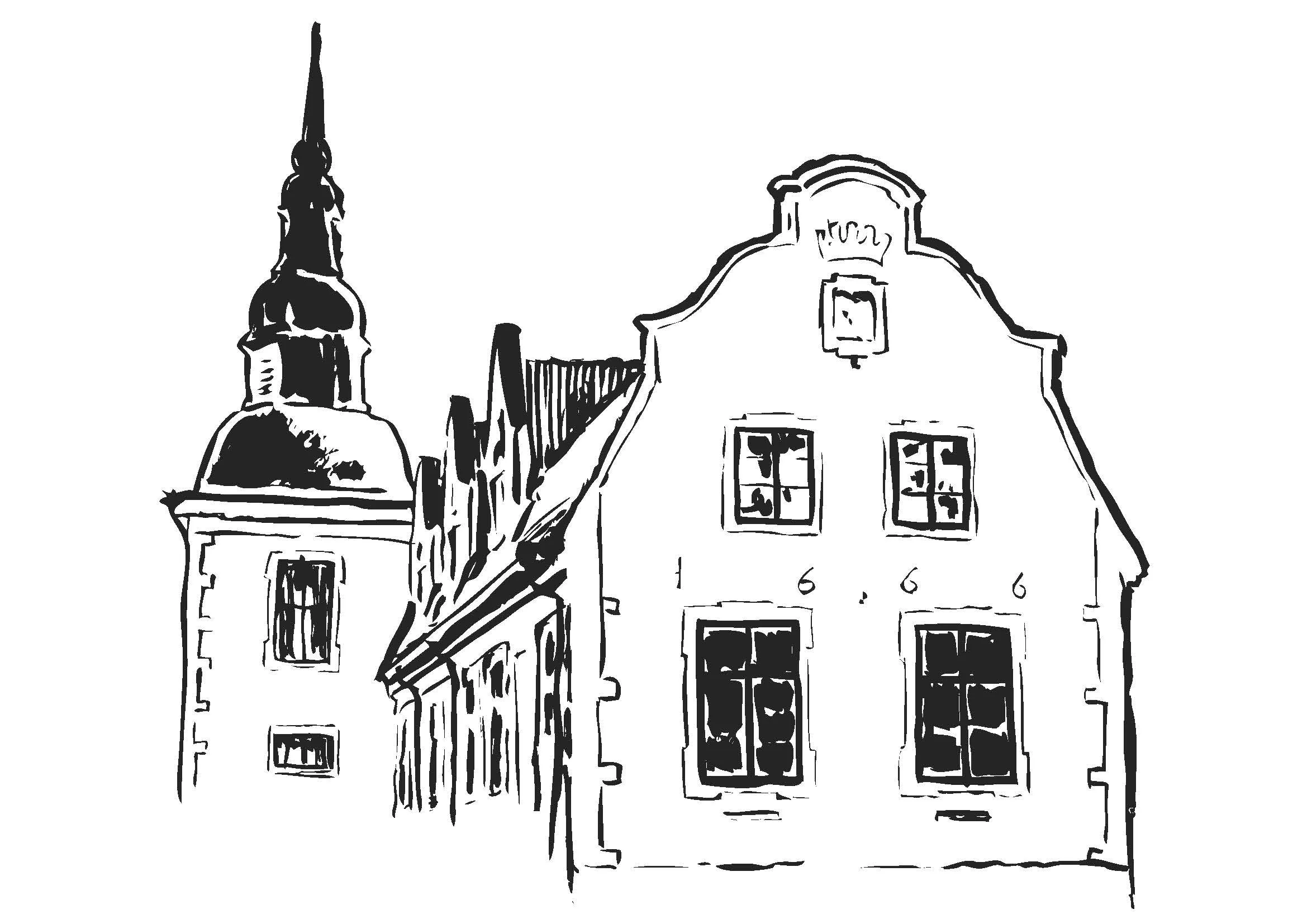
At first, the people of Västergötland did not have a place of their own to gather. The provincial assemblies (decision-making bodies) were held at the inspector’s home. He also kept the nation’s treasury there. It was not until 1825 that the current nation house was purchased. The funds raised were insufficient, so the inspector (Johan Winbom) had to personally guarantee the purchase price. In 1832, the nation house was put into use. The nation house, considered the most beautiful of Uppsala’s nation houses, was likely built in 1604. It was owned by Field Marshal Lennart Torstensson from 1648 to 1651. In 1663, it was sold to Professor Martin Brunnerus, who had the main building repaired and expanded. This renovation was documented by the inscription of the year 1666 on the gable facing the Fyris River.
It wasn’t until the 1880s that women were allowed to begin studying at universities. Uppsala University’s first female student was Betty Pettersson of the Gotland Nation. The first woman to enroll in the Västgöta Nation was Anna Von Hall, who enrolled on May 4, 1885. The first female “sexmästare” (in charge of social gatherings) at the nation was Jane Lundblad, who was elected to the position in 1928. Jane Lundblad established an award that is still presented each semester to female student organization leaders. The nation’s first female curator was Märta Smedmark, who served as First Curator in 1960–61.
Three renovations have taken place since the mid-19th century. The first took place in 1900–01. At that time, the tower and the murals in the Great Hall were added, depicting towns, castles, and churches in Västergötland based on illustrations from Erik Dahlbergh’s Suecia Antiqua. Minor restoration work was carried out in 1927–28, while a more extensive renovation took place in 1946–49, based on designs by Ivar Tengbom. A kitchen and an entryway were added at that time. The entrance was moved to its current location. The Kinnekulle Room was created. Finally, in 1981, the most recent renovation was carried out, during which the building was painted its brick-red color.
We can be grateful to the young people of Västergötland who, through their efforts under conditions that are difficult for us to imagine today, built our nation. That is why we students still have a second home where we can always feel welcome. Today’s Västgöta Nation, with approximately 1,100 members, is a vibrant gathering place for students. Daily activities include a lunch service, an evening pub, and Sunday brunch—all run entirely by volunteer members of the nation. It is thanks to these volunteer efforts that the nation is able to renew its history year after year.
Sources: Foreword by Inspector Emeritus John-Erik Thun, Västgöta Nation in Uppsala, 350 Years, Västgöta Correspången No. 3, 2018.